How Augmented Synthetic Controls Reveal True Marketing Impact
For marketers, measuring the real impact of a campaign isn't just about knowing if something worked; it's about quantifying precisely how much it worked and why to power even better performance over time. Traditional methods like randomized control trials (RCTs) or traditional matched market studies often face limitations: they’re expensive, difficult to scale, and sometimes impractical due to how much data is required to get a good signal.
Enter Synthetic Controls, a smarter, more scalable approach — and its even more powerful evolution, Augmented Synthetic Controls.
What exactly are Synthetic Controls?
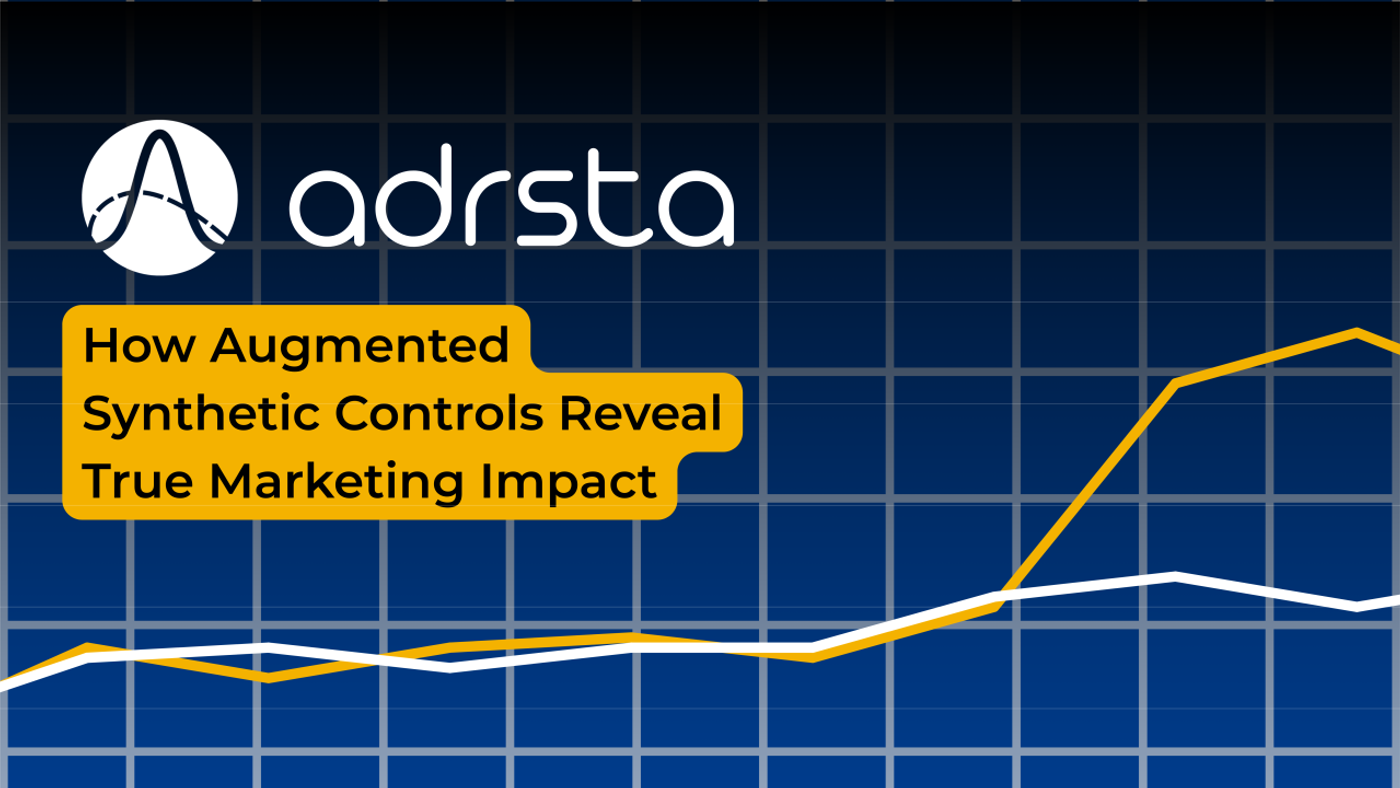
Imagine you're testing a new ad campaign in New York City. To measure its impact, you need to compare sales in New York (your "test market") against sales in a similar city that didn't receive the campaign. But what if no single city mirrors New York perfectly? Synthetic Control Methods (SCM) solve this by creating a virtual "synthetic" city made up of a weighted blend of several comparable cities. These carefully chosen weights ensure your synthetic city closely matches New York's sales trends before the campaign begins. Post-campaign, any difference between New York and its synthetic counterpart is attributed directly to the campaign.
But what if a perfect match isn’t achievable? Traditional SCM methods falter when there's no exact pre-campaign alignment between your test and synthetic markets. This is where Augmented Synthetic Controls (ASCM) step in.
How Augmented Synthetic Controls Work
ASCM combines the intuitive approach of synthetic controls with advanced machine learning techniques, specifically Ridge Regression. Ridge Regression smartly adjusts the weighting of control markets, allowing the method to handle cases where traditional SCM struggles — especially when your test market doesn't neatly fit within the range of your control markets. Simply put, Ridge ASCM allows for extrapolation outside your original control group, offering a more precise match for your test market.
Why is this valuable for marketers
ASCM is the backbone of Adrsta Synthetic Control Lift, a solution that lets marketers measure campaign lift accurately with a number of key advantages:
- Precision Without Holdouts: Holdouts are powerful but expensive and sometimes impractical, particularly in highly competitive markets. ASCM delivers precise incremental lift insights without disrupting business-as-usual activities.
- Flexible Testing: ASCM allows for agile campaign measurement, quickly identifying what's working (or what's not) in virtually any scenario, from hyper-local to national campaigns.
- Actionable Insights: Detailed reporting not only shows whether your campaign worked but provides clear insights into why it worked, facilitating better future marketing decisions.
Case in Point: GIPHY & PepsiCo
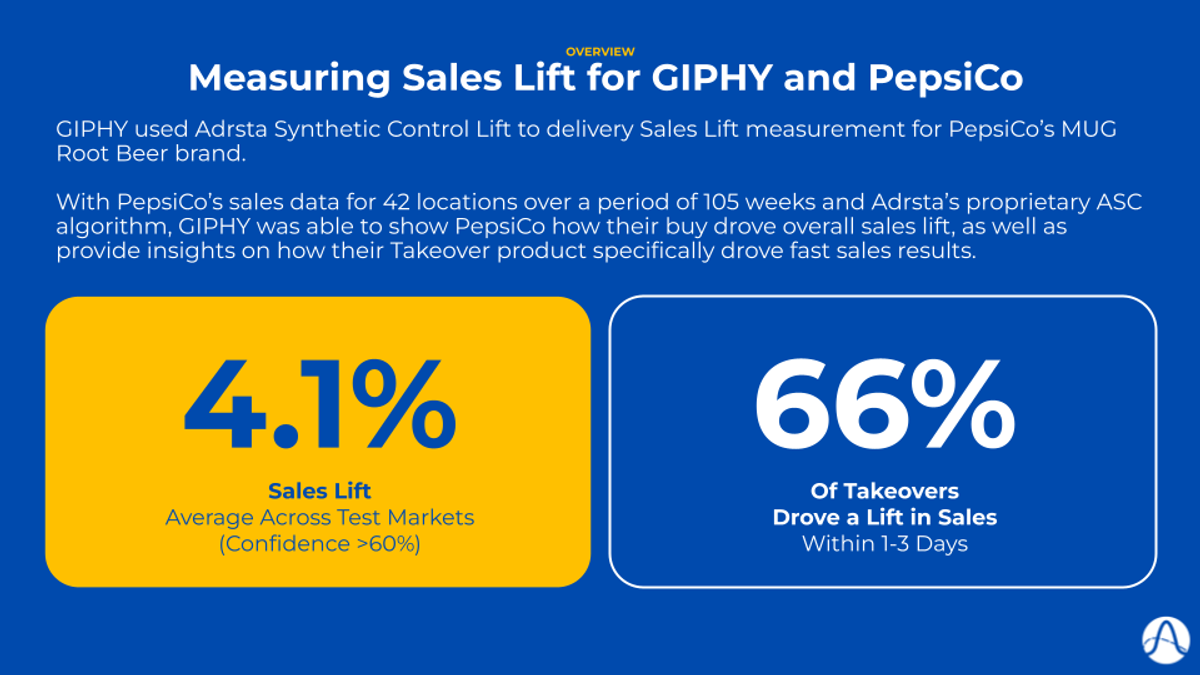
GIPHY used Adrsta's Synthetic Control Lift capability to measure the sales impact of PepsiCo’s MUG Root Beer ad campaign. With data from 42 locations over 105 weeks, Adrsta’s ASCM-driven approach demonstrated a clear 4.1% lift in sales attributable to the campaign — insights that traditional measurement techniques would struggle to deliver cost-effectively
For marketers aiming for smarter spending, clearer results, and more impactful campaigns, Augmented Synthetic Controls are more than just a sophisticated measurement technique; they're a competitive edge. Adrsta’s Synthetic Control Lift, powered by ASCM, offers marketers a robust, scalable way to confidently measure and optimize their investments in real-time, ensuring every marketing dollar delivers maximum return.